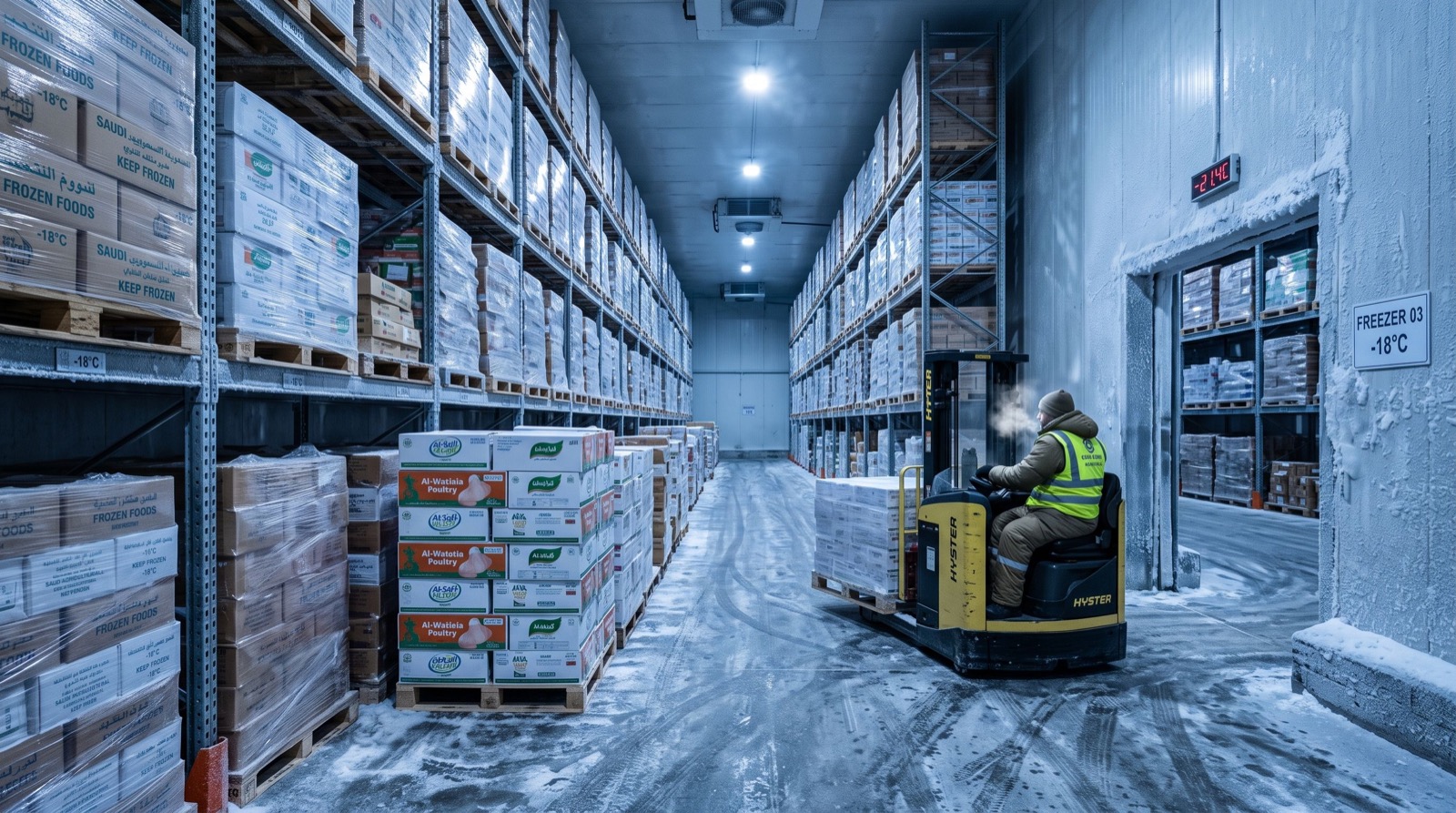
There is no margin for error in frozen storage. When temperature-sensitive products that must be maintained below freezing experience even a brief excursion beyond their required temperature range, the consequences are immediate, severe, and irreversible. Products spoil, safety is compromised, regulatory violations are triggered, and financial losses accumulate at a pace that can devastate businesses of every size. Frozen Storage is the critical cold chain infrastructure that eliminates these risks — preserving product quality, ensuring regulatory compliance, and protecting the financial value of temperature-sensitive inventory from the moment it enters storage until the moment it reaches its final destination.
What Is Frozen Storage and Why Does It Matter?
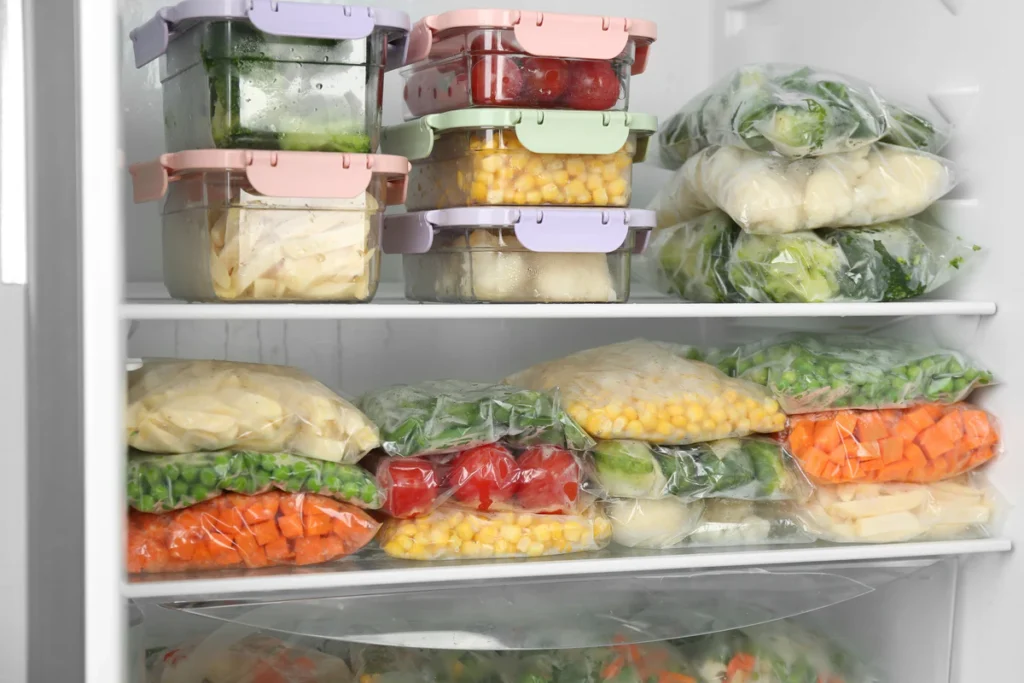
Frozen storage is the professional preservation of temperature-sensitive products at sub-zero temperatures — typically maintained between -18°C and -25°C — that halt biological deterioration, prevent bacterial growth, eliminate enzymatic activity that causes spoilage, and preserve the quality, safety, and commercial value of products for significantly extended periods compared to any other storage method.
The industries that depend on reliable frozen storage encompass some of the most important sectors of the modern food and healthcare economy. Meat processors and distributors, seafood importers and exporters, poultry producers and distributors, frozen food manufacturers, ice cream and dairy frozen products companies, pharmaceutical manufacturers handling temperature-sensitive biologics and vaccines, research institutions requiring ultra-cold sample preservation, and large-scale catering and food service operations all share a fundamental and non-negotiable dependence on frozen storage infrastructure that performs consistently and without interruption under every condition their supply chains demand.
The consequences of frozen storage failure extend far beyond the immediate financial loss of spoiled inventory. Regulatory violations triggered by temperature excursions in pharmaceutical cold chains attract severe penalties and can result in product recalls that permanently damage brand reputation. Food safety failures caused by inadequate frozen storage create liability exposure that businesses can spend years recovering from. And the loss of customer trust that follows a cold chain failure is often the most costly consequence of all — because in temperature-sensitive supply chains, trust takes years to build and moments to destroy.
Units (units.sa) is one of Saudi Arabia’s top companies delivering premium frozen storage solutions to businesses across the Kingdom — providing the technology, infrastructure, and operational expertise that organizations need to maintain the uncompromising cold chain performance that their products, their customers, and their regulatory obligations demand.
Frozen Storage in Dammam
Dammam and the wider Eastern Province represent Saudi Arabia’s industrial heartbeat — a region where the energy sector, petrochemical industry, heavy manufacturing, and the most active commercial port on Saudi Arabia’s Arabian Gulf coast converge to create one of the Kingdom’s most demanding and consequential supply chain environments. The demand for professional Frozen Storage in Dammam is driven by the Eastern Province’s enormous and diverse frozen product requirements spanning industrial catering, healthcare, food distribution, and retail supply chains simultaneously.
Dammam’s Arabian Gulf coastal location introduces climate challenges that make reliable frozen storage particularly demanding. The combination of extreme summer heat that regularly exceeds 45°C and the elevated humidity that Gulf proximity brings during transitional seasons creates an external environment that places the most severe possible demands on frozen storage infrastructure. Facilities that are not specifically engineered for these conditions struggle to maintain required temperatures consistently — and in frozen storage, inconsistency is not a minor operational issue, it is a catastrophic failure with immediate product and regulatory consequences.
Units’ Dammam frozen storage facilities are purpose-engineered for the Eastern Province’s specific climate demands. Industrial-grade refrigeration systems that are specifically rated for continuous operation in high-ambient-temperature and high-humidity conditions form the mechanical foundation of their Dammam facilities. Redundant refrigeration systems provide failsafe protection — ensuring that primary system maintenance or unexpected failure never results in temperature excursions that affect stored products. Advanced insulation systems that significantly exceed standard specifications minimize heat transfer from Dammam’s extreme external environment, reducing the energy consumption and equipment wear that inadequately insulated facilities experience. And comprehensive 24/7 automated temperature monitoring with multi-level alert systems ensures that any temperature deviation — however minor and however caused — is identified and addressed before products are affected.
The operational excellence of Units’ Dammam frozen storage extends beyond temperature control to encompass the full suite of capabilities that professional frozen cold chain management demands. The Eastern Province’s large industrial workforce creates substantial demand for industrial catering operations that depend on reliable frozen storage for the meat, poultry, seafood, and prepared frozen foods that feed thousands of workers daily at industrial facilities across the region. Healthcare institutions serving Dammam’s growing population depend on pharmaceutical-grade frozen storage for vaccines, biologics, and other temperature-sensitive medical products whose efficacy and safety are directly contingent on uninterrupted cold chain integrity. And Dammam’s expanding food retail sector — serving a population that increasingly demands the full range of frozen food products available in international markets — relies on Units’ frozen storage to maintain product quality from import clearance through distribution to retail shelves.
Frozen Storage in Jeddah
Jeddah’s position as Saudi Arabia’s primary Red Sea commercial hub and one of the Kingdom’s most cosmopolitan and commercially active cities creates a frozen storage demand that is as diverse and sophisticated as the city’s commercial landscape itself. International food importers, major food service chains, hotel chains serving millions of visitors annually, healthcare distributors, seafood businesses serving the city’s coastal food culture, and the extensive food manufacturing sector that supplies Jeddah’s large consumer market all share a critical dependence on professional Frozen Storage in Jeddah.
Jeddah’s Red Sea coastal climate presents specific challenges for frozen storage operations that go beyond the temperature management demands that inland facilities face. The city’s characteristic humidity, combined with its intense summer heat, creates conditions where poorly designed frozen storage facilities develop condensation problems, insulation degradation, and equipment strain that compromise both product safety and facility longevity. Professional frozen storage in Jeddah requires facilities specifically designed for the city’s coastal climate profile — not generic cold storage infrastructure transplanted from less demanding environments.
Units delivers purpose-built frozen storage solutions in Jeddah that address every dimension of the city’s cold chain demands. Their Jeddah facilities combine climate-specific engineering — incorporating advanced moisture management alongside temperature control for Jeddah’s humidity challenges — with operational infrastructure designed for the high-volume, high-value frozen product movements that the city’s commercial scale demands.
Jeddah’s import and export businesses handling frozen meat, poultry, and seafood through the city’s busy commercial port depend on Units’ frozen storage for immediate, reliable cold chain continuity from the moment temperature-sensitive cargo is unloaded. The city’s major hotel groups and restaurant chains — serving millions of local residents and international visitors annually — rely on consistent frozen storage access for the premium ingredients that define their kitchen quality and customer satisfaction. Pharmaceutical distributors managing temperature-sensitive biologics and vaccines across the Western Province depend on Units’ pharmaceutical-grade frozen storage for the cold chain integrity that product efficacy and regulatory compliance demand. And Jeddah’s growing frozen food retail sector counts on Units’ reliable, consistent frozen storage infrastructure to maintain the product quality from warehouse to shelf that increasingly discerning Saudi consumers expect.
Why Units Is Saudi Arabia’s Top Frozen Storage Provider
Units (units.sa) has established itself as the Kingdom’s most trusted frozen storage company through consistent delivery of temperature control precision, operational excellence, regulatory compliance, and genuine partnership with every client they serve. Here is why leading Saudi businesses choose Units for their frozen storage requirements:
- Premium frozen storage facilities purpose-engineered for Saudi Arabia’s extreme climate
- Industrial-grade refrigeration with full redundancy for uninterrupted cold chain integrity
- 24/7 automated temperature monitoring with multi-level instant alert systems
- Comprehensive temperature logging providing complete regulatory audit documentation
- Full compliance with SFDA, pharmaceutical cold chain, and food safety requirements
- Advanced moisture and humidity management for coastal facility environments
- Flexible storage terms accommodating short-term, seasonal, and long-term requirements
- Strategic facility locations in Dammam and Jeddah near key distribution routes
- Experienced cold chain operations teams ensuring product safety at every stage
- Scalable solutions serving SMEs through to large enterprise and industrial clients
Conclusion
Frozen storage is a zero-tolerance discipline. Products either arrive in perfect condition because the cold chain performed without interruption — or they do not, and the consequences ripple through supply chains, regulatory standing, and customer relationships in ways that are difficult and expensive to repair. In Saudi Arabia’s extreme climate, where the demands placed on frozen storage infrastructure are among the most severe in the world, choosing the right frozen storage partner is one of the most consequential supply chain decisions a business can make.
Units delivers the frozen storage infrastructure, technology, and operational expertise that businesses in Dammam and Jeddah need to build cold chains that perform with absolute reliability under the Kingdom’s most demanding conditions.
Visit units.sa today to explore frozen storage solutions designed specifically for your business requirements across Saudi Arabia.
Q1: What temperature range does Units maintain in its frozen storage facilities and why is this critical? Units maintains frozen storage temperatures between -18°C and -25°C — the range required to halt all biological deterioration, prevent bacterial growth and enzymatic activity, and preserve product quality, safety, and commercial value for extended storage periods. This precise temperature range is critical because even brief excursions above -18°C can initiate partial thawing that accelerates product degradation, creates bacterial growth conditions, and triggers the regulatory violations that food safety and pharmaceutical authorities treat with zero tolerance. Units’ redundant refrigeration systems and 24/7 monitoring ensure this range is maintained without interruption.
Q2: How does Units ensure frozen storage continuity during equipment maintenance or unexpected system failures in Dammam and Jeddah? Units implements full refrigeration redundancy in all its frozen storage facilities — meaning every facility operates backup refrigeration systems capable of maintaining required temperatures independently if primary systems require maintenance or experience unexpected failure. This redundancy eliminates the risk of temperature excursions caused by equipment issues that single-system facilities face. Combined with 24/7 automated monitoring that detects and alerts to any performance deviation immediately, Units’ redundant systems ensure that cold chain continuity is maintained under any operational circumstance.
Q3: What documentation does Units provide for pharmaceutical frozen storage compliance in Saudi Arabia? Units provides comprehensive temperature logging and compliance documentation for pharmaceutical cold chain clients that meets the requirements of the Saudi Food and Drug Authority and international pharmaceutical cold chain standards including WHO and GDP guidelines. Their automated monitoring systems generate continuous time-stamped temperature records across all storage zones, creating complete and tamper-evident audit trails that support regulatory inspections, product release decisions, import and export documentation, and cold chain compliance reporting. This documentation capability gives pharmaceutical clients the regulatory confidence their business depends upon.
Q4: Can Units handle emergency frozen storage requirements for businesses experiencing cold chain disruptions in Jeddah or Dammam? Yes. Units understands that cold chain emergencies — unexpected equipment failures at client facilities, urgent shipment arrivals requiring immediate cold chain continuity, or sudden demand spikes that exceed existing storage capacity — require immediate professional response. Their Dammam and Jeddah operations teams are experienced in responding to urgent frozen storage requirements quickly and effectively, providing immediate access to temperature-controlled capacity that prevents product losses and maintains regulatory compliance during supply chain disruptions that businesses cannot always anticipate or prevent.
Q5: How do I arrange frozen storage services with Units for my business in Dammam or Jeddah? Visit units.sa to explore Units’ complete range of frozen storage solutions and submit an enquiry through the website. A Units cold chain specialist will contact you promptly to discuss your specific product requirements, temperature specifications, storage volumes, handling and dispatch needs, location preferences, and timeline. They will prepare a tailored frozen storage proposal covering facility specifications, temperature management capabilities, compliance documentation standards, service terms, and transparent pricing designed precisely around your business’s cold chain requirements in Dammam, Jeddah, or anywhere across Saudi Arabia.